Ear Infection in Kids: Walk-In Clinic or ER? What Canadian Parents Need to Know
It's 7pm on a Tuesday. Your toddler has been pulling at their ear all day, crying more than usual, and now they're running a fever. Your family doctor's office is closed. You're trying to decide: walk-in clinic or emergency room?
For most parents in this situation, the answer is a walk-in clinic — and knowing that in advance makes a stressful evening a lot more manageable.
Here's everything you need to know about getting your child treated for an ear infection quickly and in the right place.
Is an Ear Infection a Walk-In or ER Situation?
In the vast majority of cases, a walk-in clinic is the right place to go.
Ear infections — medically called otitis media — are one of the most common childhood illnesses in Canada. They're the number one reason parents bring young children to walk-in clinics. A walk-in doctor or nurse practitioner can examine your child's ear with an otoscope, confirm the diagnosis, and prescribe treatment right there.
You don't need an appointment, you don't need a referral, and you don't need to wait until morning to call your family doctor. Walk-in clinics handle this every single day.
Signs Your Child Has an Ear Infection
Young children — especially babies and toddlers — can't always tell you their ear hurts. Here's what to watch for:
Pulling, tugging, or batting at one or both ears
Crying more than usual, especially when lying down
Trouble sleeping — ear pain often gets worse when horizontal
Fever, typically between 38°C and 39°C
Difficulty hearing or not responding to sounds as clearly as usual
Fluid or discharge coming from the ear
Unusual irritability or fussiness with no obvious cause
Older children may say directly that their ear hurts or feels full
If your child has several of these symptoms together, there's a good chance it's an ear infection. A walk-in clinic can confirm it within minutes.
When to Go to the ER Instead
Most ear infections don't require emergency care. But some situations do. Take your child to the ER if:
Their fever is above 39.5°C (103°F) and not responding to children's acetaminophen or ibuprofen
They seem extremely unwell — lethargic, difficult to wake, or unresponsive
You notice swelling, redness, or tenderness behind the ear — this can indicate a more serious infection called mastoiditis
There is significant discharge or bleeding from the ear canal
Your child has a stiff neck alongside fever — this requires immediate evaluation
They are under 6 months old and have any fever at all — infants this young should always be seen urgently
You are genuinely worried something is seriously wrong — trust your instincts as a parent
For everything else, a walk-in clinic will serve you faster and more appropriately than an ER.
What Happens at the Walk-In Clinic
Here's what a typical visit looks like:
Check-in and wait You arrive, present your child's provincial health card, and wait your turn. Check WalkinNow before you leave home — you can see which clinics near you are open right now and what the current wait time is. Going to a clinic with a 20-minute wait versus a 90-minute wait makes a real difference with an uncomfortable child.
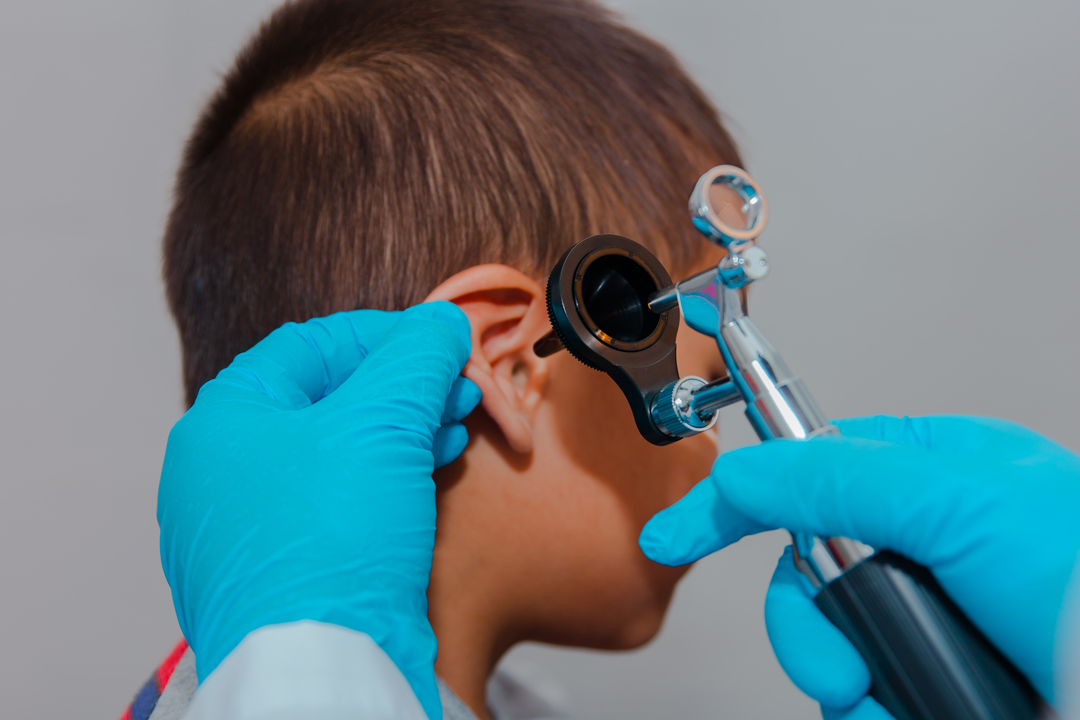
The examination The doctor or nurse practitioner will look inside your child's ear using an otoscope — a small handheld light. They're looking for redness, swelling, and fluid behind the eardrum. The exam takes about two minutes and is uncomfortable but not painful.
They'll also check your child's throat, lymph nodes, and sometimes their nose — ear infections often come alongside colds and upper respiratory infections.
The diagnosis and treatment decision Not every ear infection requires antibiotics. Guidelines in Canada — and most of the developed world — now recommend a "watchful waiting" approach for many ear infections in children over 2 years old, particularly when symptoms are mild. The reasoning is that many ear infections are caused by viruses, which antibiotics won't treat, and that most bacterial ear infections resolve on their own within a few days.
The doctor will consider your child's age, the severity of symptoms, whether one or both ears are affected, and whether they've had recent ear infections.
They may:
Prescribe antibiotics immediately
Recommend watchful waiting for 48 to 72 hours with a follow-up if symptoms worsen
Write a delayed prescription — a prescription you fill only if symptoms haven't improved after a few days
All three are valid approaches depending on the situation. Don't be alarmed if the doctor doesn't prescribe antibiotics right away — ask them to explain their reasoning and what signs should prompt you to seek care again.
Pain management Regardless of whether antibiotics are prescribed, the doctor will advise on managing your child's pain and fever. Children's acetaminophen (Tylenol) and ibuprofen (Advil) are both effective for ear infection pain. Warm compresses on the ear can also help.
What to Bring to the Walk-In Clinic
Your child's provincial health card
Your child's weight if you know it — helps with dosing calculations for antibiotics and pain medication
A list of any medications your child is currently taking, including vitamins and supplements
Any known drug allergies, particularly to penicillin or amoxicillin — the most common first-line antibiotic for ear infections
A comfort item for your child — a favourite toy or soother can make the wait and the exam much easier
How Much Does It Cost?
If your child has a valid provincial health card, the walk-in consultation is fully covered. You pay nothing for the visit.
If antibiotics are prescribed, you pay at the pharmacy. A typical course of amoxicillin for a child costs $10 to $25 at a Canadian pharmacy. If you have a family drug plan through your employer, most antibiotic prescriptions are covered.
In Ontario, children under 25 have their prescriptions covered under the Ontario Drug Benefit program — you pay only a small dispensing fee.
Ear Infections in Babies Under 6 Months
This deserves a separate note. Any fever in an infant under 3 months old is a medical emergency — go to the ER, not a walk-in clinic. For babies between 3 and 6 months, any fever should be evaluated urgently, and a walk-in clinic is appropriate only if the baby appears well otherwise. When in doubt, go to the ER with a young infant.
Recurrent Ear Infections
Some children get ear infections repeatedly — four or more times in a year is considered recurrent. If this is the case for your child, mention it at your walk-in visit. The doctor may refer you to a pediatric ear, nose, and throat specialist to discuss options like ear tubes (grommets), which can significantly reduce the frequency of infections in children prone to them.
A Note for French-Speaking Parents in Canada
Si vous cherchez des soins pédiatriques en français, WalkinNow vous permet de filtrer les cliniques offrant des services en français dans votre ville. Au Québec, en Ontario francophone, et au Nouveau-Brunswick, de nombreuses cliniques walk-in servent les familles dans les deux langues officielles.
The Bottom Line
An ear infection in your child is stressful — but it's manageable. A walk-in clinic can see your child the same day, confirm the diagnosis, and get them on the path to feeling better, all without an appointment.
Save the ER for the warning signs listed above. For everything else, a walk-in clinic is faster, calmer, and exactly the right level of care.